Tuina Massage
Tuina is a firm, therapeutic Chinese massage. It is used as a complementary, hands-on approach for muscular tension and stiffness — results vary, and it is not a cure.
What it is
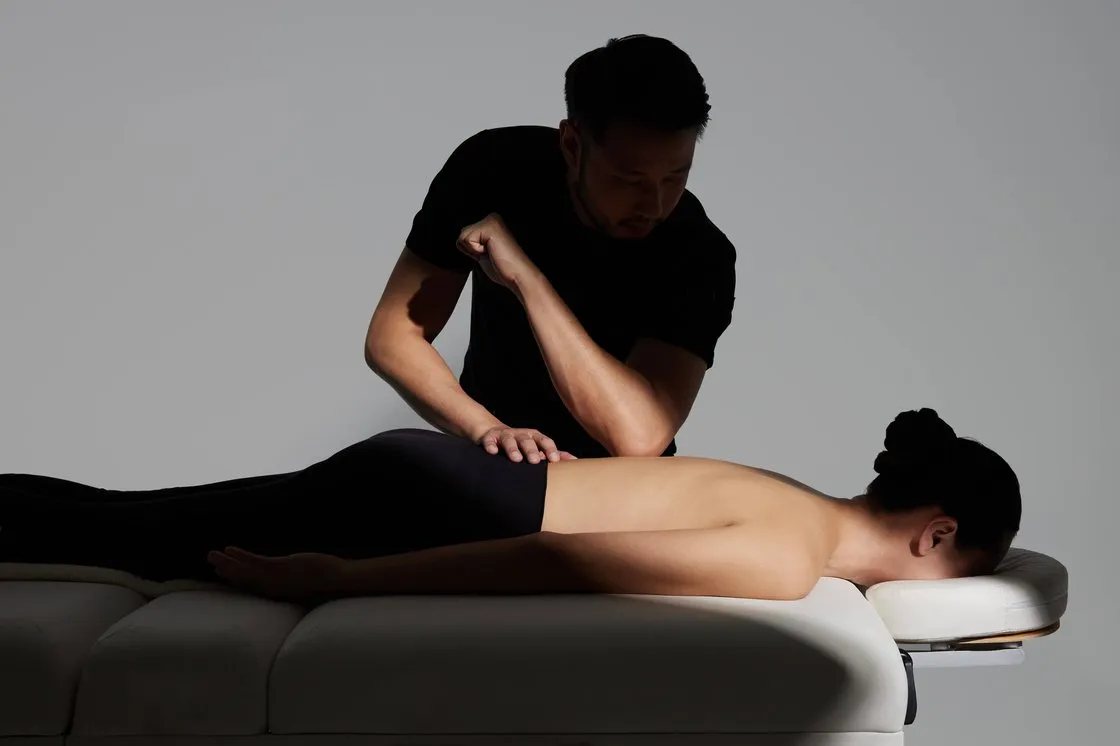
Tuina (literally "push and grasp") is a hands-on Chinese massage that uses pressing, kneading and rolling techniques along the muscles, together with gentle joint mobilisation. Unlike a purely relaxing massage, it is applied with a clear therapeutic aim and can be quite firm.
We use it on its own or alongside acupuncture, as a complement to movement and any medical care you need. How much it helps, and for how long, differs from person to person.
What to expect in a session
After discussing where the tension sits and how you move, the practitioner works on the affected areas with firm pressure, kneading and stretching. Some tenderness over tight spots is normal and usually feels like a "good" ache.
A session typically lasts 45 to 60 minutes. Sharp pain is not the goal — tell your practitioner if the pressure is too strong and they will ease off.
What it is typically used for
Tuina is most often used for back, neck and shoulder tension, stiffness from posture or overuse, and tension headaches linked to a tight neck. It is also sometimes used to support functional digestive complaints. It addresses muscular and functional symptoms, not underlying disease.
What the evidence says
Good-quality research specifically on Tuina is limited. Massage in general has reasonable evidence for short-term relief of muscular and low-back pain, and many people find Tuina directly eases tension. We are honest that the specific evidence is thin and present it as a sensible, low-risk complement.
We base this on general clinical guidelines and systematic reviews (e.g. Cochrane, PubMed-indexed research). The honest summary: studies vary in quality and findings, and individual results differ. We use Tuina Massage as a complement, not a substitute for medical assessment.
Conditions it commonly supports
People often try Tuina Massage as part of a wider approach for:
FAQ
How is Tuina different from a relaxing massage?
Tuina is applied with a therapeutic aim — easing specific areas of tension and stiffness — and tends to be firmer and more targeted than a spa massage. It often forms part of a wider TCM treatment alongside acupuncture, rather than being purely for relaxation, though many people still find it calming.
Does Tuina hurt?
It can be firm, and some tenderness over tight muscles is normal and usually feels relieving. It should not be sharply painful. Tell your practitioner if the pressure is too much and they will adjust — more pressure is not necessarily better.
How many sessions will I need?
There is no set number. Many people start with a short course and we reassess as we go. For tension driven by posture or stress, we will also talk about what you can change between sessions, since massage alone rarely fixes the underlying cause.
Is this covered by my insurance?
Treatment by our EMR-/ASCA-recognised practitioners is typically reimbursed through Swiss supplementary insurance for complementary medicine, not basic insurance. How much you get back depends on your individual policy. Our insurance guide explains the basic-versus-supplementary split in plain English.
This page is general information, not medical advice, and does not promise any cure or specific outcome. If symptoms are severe, sudden or worsening, see a doctor.
Related therapies
Acupuncture
The best-known TCM treatment — fine needles at specific points, used as a complementary approach.
Cupping
Suction cups to ease tight muscles and improve local circulation — often combined with acupuncture.
Shiatsu
A calming, fully clothed Japanese pressure therapy, often used for stress and tension.